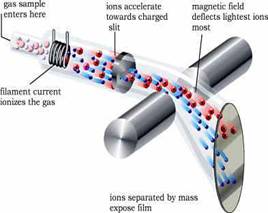
 The
Department of Chemistry at Purdue University invites you to apply for an
The
Department of Chemistry at Purdue University invites you to apply for an
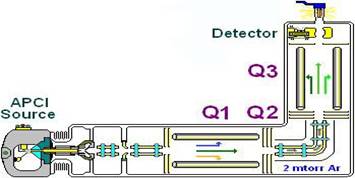 REU in Mass Spectrometry

 Summer, 2010
Research Experience for Undergraduates in the field of mass spectrometry
Mass spectrometry has historically been a versatile and popular
analytical technique, regularly applied to a diverse range of problems
including radioactive isotopic decay measurements and isotopic dating, and the
classic molecular structure determination.
Almost every spaceship sent to study outer space carries a mass
spectrometer 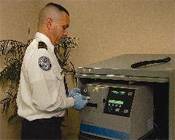 on board. When TSA agents at the airport wipe your
laptop to check for explosive residue, they use mass spectrometry, as do the
laboratories that test athlete’s samples
on board. When TSA agents at the airport wipe your
laptop to check for explosive residue, they use mass spectrometry, as do the
laboratories that test athlete’s samples  for steroids.

In addition to the analytical applications, mass spectrometry also
plays an important role in many chemical studies, ranging from simple GC-MS
analysis of a reaction mixture to being an integral detection technique for
physical studies of gas-phase reactivity and structure. Newly developed ionization techniques, such
as MALDI and electrospray ionization, have expanded the capabilities well
beyond that of standard trace gas analysis to polymers, nanomaterials and
biological molecules, either detected intact or through digestive techniques
such as proteomics. Continuing
development of ionization techniques and mass  spectrometric
methodology promises to increase its applicability in nearly
spectrometric
methodology promises to increase its applicability in nearly 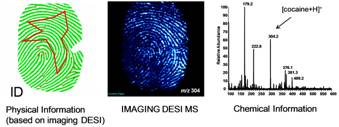 all
aspects of scientific and forensic analysis.
As a result, modern chemistry students are increasingly likely to
encounter mass spectrometry throughout their careers.
all
aspects of scientific and forensic analysis.
As a result, modern chemistry students are increasingly likely to
encounter mass spectrometry throughout their careers.
In this REU program, you will be introduced to many of the
applications of mass spectrometry, and have the opportunity to carry out
research with an internationally-renowned researcher using mass spec.
Deadline for Applications:
March 12, 2010
For more information, contact Prof.
Paul Wenthold